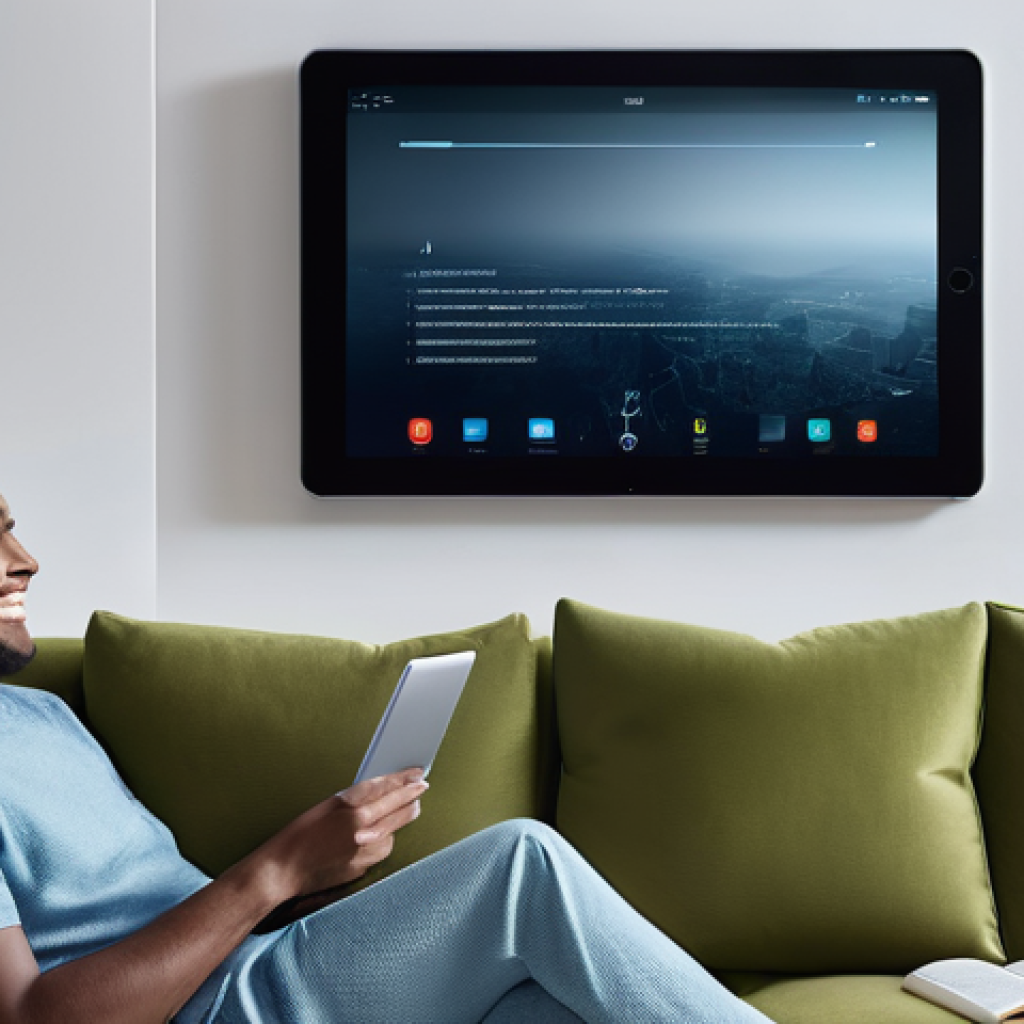
Remember when picking an OTT service was a simple choice between one or two big names? My, how quickly things have changed! What used to feel like a cozy living room offering has exploded into a cutthroat digital arena, with every giant vying for your precious attention and hard-earned subscription dollars.
I’ve been immersed in this fast-evolving landscape, and what I’ve personally observed is that the game isn’t just about who pumps out the most blockbusters anymore.
The future of streaming is being shaped by far more intricate, almost invisible, competitive forces that will ultimately decide which platforms truly resonate with us and which fade into the background.
So, if you’re curious about what truly sets the winners apart in this fascinating race for our screens, let’s pull back the curtain and accurately discover the core competitive factors shaping tomorrow’s entertainment.
The Hunt for Hyper-Personalization: Algorithms That Read Your Mind

Beyond Basic Recommendations: Predicting Your Next Binge
My goodness, do you remember when a streaming service just suggested shows “because you watched X”? It felt so groundbreaking then, but honestly, that’s ancient history now.
What I’ve seen firsthand is a massive leap towards algorithms that feel almost psychic. We’re talking about systems that don’t just know what genre you like, but when you typically watch, what mood you might be in, and even which device you’re most likely to use.
Think about it: if I usually watch gritty dramas late at night on my tablet, but during the day I put on a lighthearted comedy for my kids on the living room TV, the truly smart platforms are picking up on those subtle cues.
They’re not just recommending “more drama” or “more comedy”; they’re crafting a viewing journey that adapts to *my* life, my habits, and even my current emotional state.
It’s a delicate dance between making you feel seen and not being creepy, and the services that nail this are the ones that keep me glued to the screen, scrolling for just “one more episode.” This incredible level of anticipation and curation is what truly elevates a good platform to a “can’t live without” experience, making me stay longer and explore deeper.
The Data Goldmine: Why Every Click Matters
Every single tap, pause, rewind, and fast-forward we make within an app is a tiny, invaluable piece of data. From what I’ve observed, the smartest players in the game are treating this information like pure gold.
They’re not just logging what you watched, but *how* you watched it. Did you skip the intro? Did you rewatch a scene?
Did you browse for 20 minutes before settling on a show, and if so, what were you looking at during that browsing phase? This deep dive into user behavior allows them to refine their personalization engines to an almost unbelievable degree.
It’s about understanding the entire user journey, not just the destination. For us, the viewers, this means a more tailored experience, less time wasted searching, and more time enjoying content that genuinely resonates.
For the platforms, it means higher engagement, reduced churn, and ultimately, a more loyal audience that sees real value in their subscription. This sophisticated data analysis is the unseen architect building the future of our streaming habits, and believe me, it’s a powerful force.
Beyond the Buzz: Curated Libraries and Niche Content
The Paradox of Choice: Quality Over Sheer Volume
There was a time when the biggest selling point for any streaming service was simply how many titles it had. “Thousands of movies! Hundreds of TV shows!” But you know what?
From my own experience, that’s become less of a draw and more of a headache. The sheer paradox of choice is real. Faced with an endless scroll, I often find myself spending more time searching than actually watching.
What I’ve personally noticed is a shift in consumer desire towards quality and relevance over sheer volume. People aren’t just looking for “anything to watch”; they’re looking for *the right thing* to watch for them, right now.
This means platforms that offer a thoughtfully curated selection, perhaps with a clear editorial voice or thematic focus, are starting to stand out. It’s less about having every single movie ever made, and more about having a really strong collection of great films, or shows that genuinely resonate with a specific audience.
I’ve found myself gravitating towards services that feel more like a trusted video store with a knowledgeable clerk, rather than a giant, overwhelming warehouse.
Unearthing Hidden Gems: The Rise of Specialized Platforms
This focus on quality and specific audiences has given rise to something truly exciting: the flourishing of niche streaming services. While the big players try to be everything to everyone, I’ve seen a real surge in platforms dedicated to very specific interests.
Think about it – if you’re a die-hard horror fan, you might subscribe to Shudder. If anime is your jam, Crunchyroll is probably your go-to. For documentary enthusiasts, there’s Nebula or MagellanTV.
These specialized platforms aren’t trying to compete on blockbuster budgets with the giants; instead, they’re winning over incredibly loyal audiences by offering deep, authentic, and often exclusive content within their chosen genre.
They foster a sense of community around shared passions, and honestly, that’s something the generalist platforms often struggle with. As someone who appreciates finding those hidden gems and connecting with like-minded fans, I genuinely believe these niche services are a crucial part of the future landscape, proving that sometimes, being really good at one thing is far better than being mediocre at many.
The Wallet Wars: Pricing Strategies and Bundle Battles
The Subscription Fatigue: When Enough is Enough
Let’s be real, folks. My bank statement has started to look like a digital media consumption diary, and frankly, I’m experiencing serious subscription fatigue.
What used to be a simple choice between one or two services has ballooned into a monthly expense that can rival a utility bill. I’ve personally found myself doing a yearly audit, asking, “Do I *really* watch this enough to justify the $15 a month?” It’s a common sentiment, and it highlights a critical challenge for streaming providers: how many subscriptions can one household realistically maintain before feeling overwhelmed?
The answer, for most of us, isn’t “all of them.” This struggle for our wallets means that platforms can’t just rely on good content anymore; they need to offer compelling value, flexibility, and a clear reason why *their* service deserves that precious monthly slot in our budget.
The days of effortlessly signing up for every new platform are, from what I’ve seen, quickly coming to an end.
Bundling Up: The New Age of Value Deals
In response to this growing subscription fatigue, I’ve observed a fascinating evolution in how services are trying to win us over: the rise of strategic bundling.
It’s almost like going back to the cable TV days, but with a modern, more customizable twist. We’re seeing services team up, or even companies offering their own multi-platform bundles, to present a more attractive package deal.
For instance, the Disney Bundle (Disney+, Hulu, and ESPN+) is a prime example of this. It gives subscribers access to a diverse range of content from sports to family entertainment, all under one (albeit combined) price point that feels more manageable than three separate bills.
I’ve found these bundles to be genuinely appealing, especially when they combine services I was already considering. It’s a smart move to create perceived value and make it harder for us to cancel, effectively consolidating revenue streams while offering us a better bang for our buck.
The future, in my opinion, will be less about standalone services fighting for sole attention, and more about who can create the most irresistible and cost-effective bundles that feel like a complete entertainment ecosystem.
| Model | Description | Pros | Cons |
|---|---|---|---|
| Ad-Supported (AVOD) | Free access with commercials, often for a limited library. | Low barrier to entry, wide reach, great for casual viewing. | Ad interruptions, potentially lower content quality or older titles. |
| Subscription (SVOD) | Monthly/annual fee for ad-free access to a full library. | Ad-free, exclusive content, premium experience, consistent viewing. | Subscription fatigue, higher cumulative cost for multiple services. |
| Transactional (TVOD) | Pay per view or rent specific movies/shows, often new releases. | Access to new releases without a full subscription, only pay for what you want. | Can be expensive for frequent viewing, no library access for casual browsing. |
| Hybrid (Mixed) | Tiered options: cheaper ad-supported, premium ad-free. | Flexibility for consumers, wider revenue streams for platforms. | More complex choices, some premium content or features tied to higher tiers. |
The Power of Presence: Beyond Just Watching
Interactive Storytelling: More Than Just a Viewer
You know, it used to be that watching a show was a completely passive activity. You pressed play, you watched, you maybe talked about it with friends later.
But what I’m seeing now, and what genuinely excites me, is the push towards interactive storytelling. Remember those choose-your-own-adventure books? Well, it’s like that, but for streaming!
Netflix has experimented with titles like “Bandersnatch” and even some kids’ shows where *your* choices directly influence the narrative. While it’s still early days, the potential here is enormous.
Imagine not just being a spectator, but an active participant in the story. For me, that’s a game-changer for engagement. It transforms viewing from a one-way street into a dynamic, personalized experience that pulls you in deeper.
This kind of innovation isn’t just a gimmick; it’s a fundamental rethinking of what “watching” even means, creating entirely new ways for us to connect with the content and increasing the time we spend immersed in their worlds.
Community and Connection: Where Fandom Flourishes

Beyond choosing your own adventure, there’s also a growing understanding that people don’t just want to consume content in a vacuum; they want to share the experience.
I’ve noticed a definite trend towards fostering community around shows and movies. Think about the live watch parties I’ve been invited to, or the integrated chat features some platforms are exploring during live events.
It’s all about creating a shared experience, almost like gathering around a campfire, but digitally. When a new episode of a beloved series drops, fans don’t just watch it alone; they flock to social media, they discuss, they theorize.
The platforms that can tap into this inherent human desire for connection and build features that facilitate it – be it through exclusive forums, Q&As with creators, or even virtual meetups – are going to create incredibly sticky experiences.
It’s about cultivating fandom, not just an audience. This sense of belonging and shared passion is an incredibly powerful retention tool, making us feel more invested in the platform itself, not just the content on it.
Tech That Simply *Works*: The Unsung Hero of Streaming
Seamless Performance: The Frustration of Buffering
Honestly, there’s nothing that sends me into a spiral of frustration faster than buffering. You’re deep into a suspenseful scene, the climax is building, and then… *loading circle*.
Ugh! From my own personal experience, the fundamental, often-overlooked competitive factor in streaming is the underlying technology. We take it for granted until it fails, but the truth is, the services that consistently deliver seamless 4K HDR, crisp audio, and instant loading times across all my devices are the ones I stick with.
It’s not flashy, it’s not a new show, but it’s absolutely essential. I’ve found that even the most compelling exclusive content can’t overcome a consistently clunky, unreliable playback experience.
The engineering behind the scenes – robust content delivery networks, optimized video codecs, and responsive server infrastructure – is the true unsung hero.
When the tech just *works*, it fades into the background, allowing the content to shine. When it doesn’t, it becomes an infuriating roadblock, and I, for one, will quickly look elsewhere.
Cross-Device Harmony: Your Shows, Everywhere
In today’s multi-device world, the ability to pick up where I left off, regardless of whether I’m on my smart TV, my phone, or my laptop, is non-negotiable.
It sounds simple, right? But the execution of true cross-device harmony is a marvel of engineering, and it’s a huge factor in my personal choice of streaming services.
What I’ve observed is that the platforms that excel here don’t just synchronize my watch history; they ensure the user interface is intuitive and optimized for every screen size, that downloads for offline viewing are smooth, and that casting to external devices is a breeze.
I want my entertainment to be fluid, following me from the living room couch to my commute without a hiccup. When an app crashes on my tablet, or doesn’t remember where I stopped watching on my TV, it immediately erodes my trust and enjoyment.
The services that invest in truly polished, reliable multi-platform experiences are the ones that earn my long-term loyalty, because they understand that our lives aren’t confined to a single screen anymore.
Content is Still King, But the Crown is Shared
The Evergreen vs. The Blockbuster: Balancing the Library
While I mentioned earlier that it’s not *just* about blockbusters anymore, let’s be clear: fresh, compelling content remains absolutely critical. However, what I’ve personally noticed is a crucial balancing act emerging.
It’s no longer enough to drop one huge, expensive series every month. The services that truly thrive are the ones that understand the power of an “evergreen” library alongside those buzzy new releases.
Think about it: I might subscribe for that one must-see show, but what keeps me around for months or years after is the deep catalog of comfort watches, classic films, and reliable series that I can dip into anytime.
From my perspective, a truly successful content strategy combines the gravitational pull of big, new, attention-grabbing titles with a rich, curated back-catalog that offers consistent value.
It’s about giving us reasons to subscribe *and* reasons to stay, ensuring there’s always something worthwhile to discover, whether it’s a brand-new phenomenon or a beloved old favorite I haven’t seen in ages.
Global Narratives, Local Appeal: Storytelling Without Borders
One of the most exciting shifts I’ve observed in the streaming world is the explosion of truly global content. The idea that everything had to be Hollywood-centric feels incredibly outdated now.
Shows like “Squid Game,” “Lupin,” and countless K-dramas have completely reshaped what audiences are looking for. What I’ve seen firsthand is that powerful storytelling transcends language barriers and cultural differences, especially when platforms invest in high-quality dubbing and subtitles.
This move towards global narratives with local appeal isn’t just about diversity; it’s a shrewd competitive strategy. By tapping into content creation hubs around the world, services can offer unique perspectives and fresh voices that feel distinct from the usual fare.
For me, it’s been incredibly enriching to discover stories and cultures I might never have encountered otherwise. This commitment to international production and distribution is creating a richer, more varied viewing landscape, and it’s undeniably a key factor in who will capture and retain our attention in the years to come.
글을 마치며
So, as we navigate this ever-evolving world of streaming, it’s clear that the game is far more sophisticated than just pressing play. What started as a simple luxury has blossomed into a complex ecosystem driven by mind-reading algorithms, a constant battle for our wallets, and an incredible push towards truly immersive experiences.
My personal journey through this landscape has shown me that the platforms winning our loyalty are the ones that blend cutting-edge tech with a genuine understanding of what makes us tick, from our viewing habits to our desire for community.
It’s an exciting time to be a viewer, and I can’t wait to see what innovations come next!
알아두면 쓸모 있는 정보
Audit Your Subscriptions Annually: To combat subscription fatigue, take a moment each year to review all your active streaming services. Are you genuinely using them enough to justify the cost? It’s a great way to save money and ensure you’re only paying for what truly brings you joy.
Explore Niche Services: Don’t limit yourself to the big players. If you have a specific genre or interest, there’s likely a dedicated streaming service out there that offers a deeper, more curated library of content you’ll love. It’s where you find the real hidden gems!
Leverage Bundles for Value: Keep an eye out for bundled offers from major providers. Combining services you already want, like those including a mix of entertainment and sports, can often be significantly cheaper than subscribing to each individually, offering a better bang for your buck.
Prioritize Seamless Tech Performance: When choosing a service, consider not just the content, but the user experience. Reliable streaming, quick loading times, and intuitive cross-device functionality are crucial for an enjoyable experience. Don’t settle for constant buffering!
Engage with Fandoms: Many platforms and social media groups are fostering vibrant communities around popular shows. Participating in watch parties, discussions, or fan theories can enhance your viewing experience and create a sense of shared excitement, making you feel part of something bigger.
중요 사항 정리
In essence, the future of streaming is deeply personal and increasingly integrated into our daily lives. Content remains vital, but it’s now paired with sophisticated algorithms, robust technology, and a keen understanding of viewer behavior and preferences. The services that master this complex interplay—offering compelling value, seamless experiences, and fostering community—are the ones poised to capture our long-term loyalty and precious screen time in this dynamic digital landscape.
Frequently Asked Questions (FAQ) 📖
Q: Okay, I get that content is king, but the intro mentions “intricate, almost invisible, competitive forces.” What exactly are these beyond just pumping out blockbusters?
A: You’ve hit on the absolute core of what’s changing, and honestly, it’s what truly keeps me subscribed to one service over another these days. While blockbusters still grab headlines, the real battleground has shifted to the experience.
Think about it: a truly intuitive user interface that just gets what you want to watch before you even type it in. I’m talking about personalization that feels like a friendly conversation, not just an algorithm.
When a service consistently recommends shows that make me think, “How did they know?”, that’s a powerful force. Beyond that, it’s about seamless performance across all my devices – no buffering nightmares, please!
And increasingly, it’s even about fostering a sense of community, with watch parties or shared recommendations. It’s those little, almost imperceptible touches – the ease of finding something new, the feeling that the platform understands my tastes, and the sheer reliability – that glue us to a service long after the initial buzz of a new show wears off.
I’ve personally seen how a clunky interface can make even the best content feel inaccessible, driving me straight to a competitor with a smoother ride.
Q: It feels like there are new services popping up every week! With so many choices, how can I genuinely figure out which streaming service is the best fit for my lifestyle and wallet?
A: Oh, I hear you loud and clear on this one! “Subscription fatigue” is a very real thing, and I’ve certainly felt the pinch of too many monthly bills piling up.
My go-to advice, based on countless hours of testing and trying, is to start by being brutally honest with yourself about your actual viewing habits. Do you mostly watch one specific genre, like sci-fi or true crime?
Then a niche service might actually offer more bang for your buck than a broad, expensive one. Are you a “binge-watcher” who devours a whole series in a weekend, or do you prefer to spread it out?
This can help you decide if rotating subscriptions – picking up one for a month, canceling, then moving to another – makes more sense than having five active at once.
Always, always take advantage of those free trials! They’re your best friend for test-driving the content library, the user experience, and even checking if it plays nicely on all your devices.
Don’t forget to factor in potential bundles, too. Sometimes, combining a streaming service with your internet or phone plan can unexpectedly shave off a few dollars.
It’s about being strategic, not just signing up for everything that looks shiny.
Q: So, what’s next?
A: re we just going to keep adding more and more services, or is there an endgame to this “streaming war”? What should we expect in the next few years? A3: That’s the million-dollar question, isn’t it?
From where I’m standing, immersed in the ebb and flow of this industry, I genuinely don’t think we’ll see an endless proliferation of major new players.
The market is maturing, and honestly, our wallets have a limit! What I anticipate – and am already seeing hints of – is a period of consolidation. Some smaller, less-differentiated services might get acquired, or simply fade away.
We’ll likely see more strategic partnerships, too, perhaps offering bundled deals that make sense for both consumers and companies. The rise of ad-supported tiers is definitely here to stay and will become even more prevalent, offering a more budget-friendly entry point for many.
I also believe we’ll see an increased focus on truly global content strategies, not just exporting existing shows, but creating content that resonates deeply with diverse international audiences from the ground up.
It’s less about a constant explosion of new services and more about the existing giants refining their offerings, trying to capture our attention with better tech, smarter personalization, and, yes, still those occasional, irresistible blockbusters that remind us why we fell in love with streaming in the first place.